Why Your Gutters Are Trying to Tell You Something
Most homeowners don’t think about their gutters until something goes wrong, and by then, the damage is already done. A flooded basement, rotting fascia boards, or a cracked foundation can all trace their roots back to one neglected task: gutter cleaning.
The thing is, your gutters don’t suffer in silence. They send signals. Subtle at first, then increasingly hard to ignore. Learning to read those signals early can save you hundreds, sometimes thousands, of dollars in repairs.
This guide walks you through every major warning sign that your gutters are overdue for a clean-out, why each one matters, and what to do before a small problem becomes a costly one.
The Purpose of Gutters (And What Goes Wrong When They Fail)
Before diving into the warning signs, it helps to understand what gutters actually do. Their job is simple: channel rainwater away from your roof, walls, and foundation. When they work correctly, you never notice them. When they don’t, the consequences ripple through your entire home.
Clogged gutters overflow. Overflowing gutters dump water in the wrong places, against your siding, into your soil line, underneath your roofing material. Over time, that moisture finds its way into places it should never reach.
The irony is that gutters get clogged doing their job. Leaves, twigs, seed pods, dirt, and even small animals accumulate until water has nowhere to go. Regular cleaning, typically twice a year, keeps that cycle under control.
Top Signs Your Gutters Need Cleaning Right Now
1. Water Spilling Over the Sides During Rain
This is the most obvious sign, and it’s hard to miss if you’re watching during a storm. Instead of flowing through the downspout, water cascades over the front edge of the gutter like a waterfall.
That overflow isn’t just annoying, it’s actively harmful. It pools against your foundation, softens the soil, and can seep into basements or crawl spaces. If you see this happening, the gutter is blocked somewhere, and water is backing up with nowhere else to go.
Don’t wait for the next heavy rain to confirm it. If you’ve noticed it once, it’s already past time to act.
2. Sagging or Pulling Away from the Fascia
Gutters are designed to be lightweight. They’re typically made from aluminum or vinyl, and when empty, they sit snugly against the fascia board along your roofline.
When they fill with debris, especially wet, compacted leaves, they get heavy fast. That weight pulls the gutter away from its mounting brackets or causes the whole channel to sag in the middle. You might notice a visible dip or gap between the gutter and the fascia.
Left unchecked, this can lead to the gutter detaching entirely, which is both a safety hazard and an expensive fix. A sag is your gutter asking for help before it reaches that point.
3. Plants Growing in Your Gutters
This one catches people off guard the first time they see it. But it’s more common than you’d think, especially in spring and summer. If enough organic material collects in a gutter, seeds carried by the wind take root. Given a little moisture and sunlight, they grow.
Seeing small weeds, moss, or even tiny seedlings sprouting from your gutters is a clear sign the debris has been sitting there long enough to become a growing medium. That’s not a gutter that needs cleaning, that’s a gutter that needed cleaning months ago.
4. Staining or Streaks on Your Siding
Look at the exterior walls beneath your gutters. If you see dark vertical streaks running down the siding, that’s a sign water has been overflowing consistently. The streaks are caused by dirty, debris-filled water running down the side of the house instead of through the downspout.
Over time, this staining can be difficult to remove and may indicate deeper moisture damage to the siding itself. Catching it early means a cleaning job. Ignoring it can mean repainting or replacing sections of your home’s exterior.
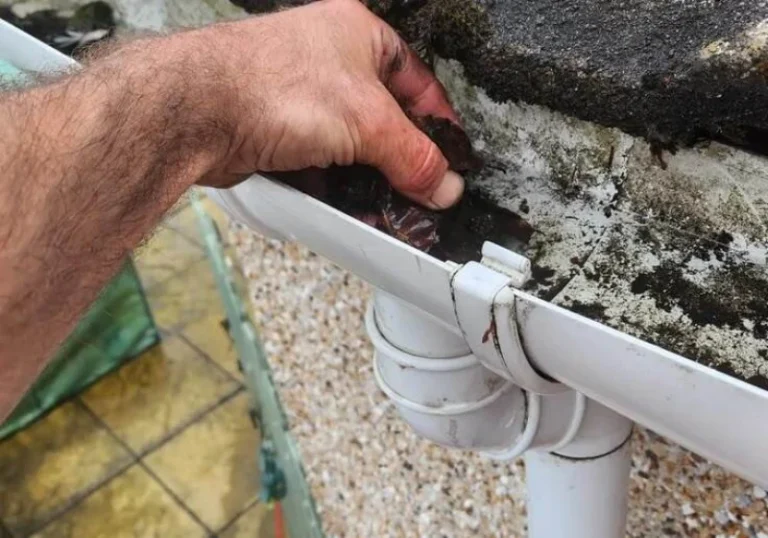
5. Gutters Filled with Visible Debris
Sometimes you don’t need any secondary clues. You can just look up and see the problem directly. A gutter packed with leaves, twigs, pine needles, or compacted dirt is obviously not doing its job.
A quick visual inspection from the ground, or a safer look from a ladder, will tell you a lot. If the channel is obscured by debris, the water has nowhere to flow. It’s as simple as that.
6. Birds or Pests Taking an Interest
If you’ve noticed birds repeatedly perching and pecking at your gutters, they may be foraging through the organic material that’s built up inside. More concerning is if you see signs of rodents or insects near the roofline.
Clogged, damp gutters are an attractive nesting ground for mosquitoes, carpenter ants, and even small rodents. Standing water in a blocked gutter can breed mosquitoes within a matter of days. If pests seem drawn to that area of your home, the gutters are likely providing exactly the environment they’re looking for.
7. Water Damage or Staining in Your Basement
This one feels unconnected, but it’s more related than most people realize. If your gutters overflow against the foundation consistently, water infiltrates the soil around your home’s base. That moisture can work its way through concrete or block foundations over time.
Unexplained damp patches, water stains, or mild flooding in your basement after heavy rain should prompt you to look up, not just down. The problem may have started at the roofline.
8. Your Last Cleaning Was More Than a Year Ago
Sometimes the most reliable warning sign isn’t visual at all, it’s a date on the calendar. Most gutter professionals recommend cleaning at least twice per year: once in late spring after seed and pollen season, and once in late autumn after the leaves have fallen.
If you can’t remember the last time your gutters were cleaned, that’s your sign. Even if everything looks fine from the ground, debris builds up in ways that aren’t always visible until a heavy rain reveals the problem.
9. Gutters Making Noise During Rain
Gutters should be relatively quiet during rainfall. Water flowing freely through a clear channel doesn’t make much sound. But if you’re hearing gurgling, dripping inside walls, or an unusual rushing noise concentrated at one area, something is off.
Gurgling often means water is trying to force past a blockage. Dripping sounds from inside the wall cavity can indicate water is getting behind the gutter and running down the fascia or into the wall structure. Both deserve prompt attention.
10. Rust, Corrosion, or Cracks Appearing
Standing water accelerates deterioration. If your gutters show signs of rust (in steel gutters), corrosion, or small cracks along the seams, moisture has been sitting in them long enough to cause physical damage.
Rust and cracks compromise the gutter’s ability to channel water properly, and repair becomes more complex once structural damage sets in. Catching it early, before a crack becomes a split, is far more cost-effective.
How Often Should You Clean Your Gutters?
The standard recommendation is twice a year, but your home’s surroundings matter. If you have large deciduous trees overhanging the roof, you may need to clean three or four times annually. Pine trees shed needles year-round, which can block gutters faster than broadleaf trees.
After major storms, especially ones with high wind that strip leaves and branches — a quick inspection is worth the effort.
General cleaning schedule by situation:
- Standard home, minimal trees: Twice a year (spring and late autumn)
- Home surrounded by trees: Three to four times a year
- After severe storms: Inspect and clean as needed
- Homes with gutter guards: At least once a year (guards reduce debris but don’t eliminate it)
What Happens If You Keep Ignoring Clogged Gutters?
The consequences escalate the longer the problem goes unaddressed. Here’s a realistic progression:
Short-term (weeks to months): Overflow staining, standing water pooling near the foundation, minor fascia moisture.
Medium-term (months to a year): Fascia board rot begins, paint peeling on siding, soil erosion around the foundation, pest activity increases.
Long-term (a year or more): Foundation damage from persistent moisture, basement flooding, interior water intrusion, potential structural issues with the roofline.
None of these are inevitable if the gutters are maintained. But they’re all predictable if they’re not.
DIY Cleaning vs. Hiring a Professional
Cleaning gutters yourself is entirely doable if you’re comfortable on a ladder and have the right tools — gloves, a bucket or tarp, a garden hose, and a stable ladder. Work from the top down, clearing debris by hand before flushing with water to confirm the downspout is clear.
That said, hiring a professional makes sense in several situations:
- Your home is two or more storeys
- The gutters have visible damage that needs assessment
- You’re not comfortable working at height
- You want a thorough cleaning plus an inspection of gutters, downspouts, and flashing
Professional gutter cleaning is relatively affordable, typically ranging from £50 to £150 in the UK or $100 to $250 in the US, depending on home size, and it buys you peace of mind alongside the clean.
Quick Prevention Tips to Reduce Future Build-Up
Cleaning is necessary, but reducing how quickly debris accumulates helps too.
- Trim overhanging branches, Less overhang means less debris dropping directly into the channel.
- Install gutter guards, Mesh or foam inserts reduce how much gets in, though they still need periodic cleaning.
- Check downspout extensions, Make sure water is being directed well away from the foundation, ideally at least 1.5 to 2 metres from the base of the house.
- Inspect after every major storm, A five-minute visual check can prevent a major issue.
Conclusion
Your gutters quietly protect some of the most expensive parts of your home, your roof, walls, foundation, and interior. They don’t ask for much: just a cleaning a couple of times a year and a watchful eye after big storms.
The signs they send when they’re struggling, overflowing water, sagging sections, plants growing in the channel, staining on the siding, are easy to spot once you know what to look for. The earlier you catch them, the simpler and cheaper the fix.
Don’t wait for water in the basement or a detached gutter to get your attention. A little maintenance now keeps a much bigger problem from developing later.